Saturday, March 14, 2009

Steak: It's what for dinner Part III (Portfolio)

"...through the way we live, work and play, we don't really choose our food--our food chooses us (Patel, pp. 253)."
-Raj Patel

As I sit here and think about my steak and my accompanying feeling of manliness I have to ask myself why does this make me feel like a man? I mean come on, regardless of whether or not I eat the steak, aren't I still a man? I have facial hair, all the right parts: as far as nature is concerned, I am a man. There must just be something about the steak itself that magnifies the feelings of being a man.

Why then don't I get similar manly feelings when I dawn a bright pink, frilly scarf, or perhaps eat a Caesar Salad, with blue cheese? There can really only be one of two possibilities for an answer to this dilemma:

1. This association with steak and manliness is innate, and comes with birth, or

2. I have learned this association from my experiences.

While I think there could be a tiny possibility that the first answer is, maybe, weakly correlated to my association, I would wager that my association is a learned phenomenon. The next question would then be: Who does the teaching? This is where things get extremely complicated.

Raj Patel says that our food habits, and anything else we do with regards to food, are shaped, not just by our society, but by multi-national food conglomerates (which he backs up with a lot of facts and speculations). As much as I hate to think that I have little to no control over the food I get to eat, I have to admit, Patel makes some very convincing points.

He briefly mentions that there are three basic factors that play into what we end up eating: work and play, the neighborhoods we live in, and the jobs we get--including the time we spend traveling between them (Patel, pp 273). Basically, a certain kind of food is marketed and sold to us depending on who we are (as consumers). This marketing starts at a very young age. Advertisers know that children are easily influenced. Children want what is cool and hip, and advertisers set the standard. Then, the trend of standard setting goes up until the child is old.

During this time, advertisers (these large food companies) strive in every conceivable way to get us to buy their stuff. They know things like that the more we eat the more overweight we get. However, these kinds of things, though fought to be kept a secret from the consumer, are not primary concerns: our money is. The funny thing is, at the same time we are influenced to buy the latest bag of 'super extra nacho spicy Doritos', we get bombarded by companies like Jenny Craig to loose a couple extra pounds around the waist. Get this, Jenny Craig is part of the Nestle Corporation (Patel, pp 280). We as consumers are trapped, just like corn farmers who buy Monsanto products, in a circle. We are given new products in an attempt to make more money, but that actually contribute to some other marketing scheme when we do what the marketers want.

So, what does this have to do with my steak? EVERYTHING! I feel manly when I eat a steak because I have been ingrained with the thought that in order for a white, middle-class male to be himself he needs to eat meat. The perpetrator of this thought is the food industry. I have been hit with ads from the time I could see far enough to focus on a television. From then my first thoughts concerning anything were formed. My thoughts since that time were reinforced until I was convinced that in order to be a man I needed to have a steak! I have literally been made FOR my food, and all this just to make a buck (This whole time I thought my food was made for me!!!)

Grapes in the Winter? What a thought!!! (Portfolio)

Lately, because I have been learning a bit about the global food system, I have been checking my food (the fruit and veggies at least) to see where they originated. The month being March, and us coming off a little bit colder/longer winter, the fruit at my local supermarket seems to (with the exception of apples) need a passport. My bananas came from Ecuador, the grapes from Chile, and my mushrooms came from Canada (though I don't know from which part...). My wife and oldest daughter (with particular regard to the grapes) think this is just great. Why, practically every day of the year we can go to the Safeway down the road and pick up some grapes, they being my Daughter's favorite food (Hot Dogs come in a distant second). I'm not going to lie, having my favorite food at my finger tips whenever I feel like having it is a wonderful feeling, but what is the cost?

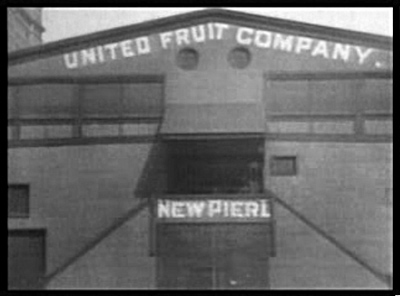
Raj Patel, in his debut novel 'Stuffed and Starved', speaks about one particular global exporter of fruit, the United Fruit Company, and what they have done to preserve profit and trade. In a nutshell, to protect profit the UFC pulled out all the stops. They called the then current president of Guatemala a communist because he wanted to buy the unused UFC land and then give it to landless peasants at the ridiculously low prices that the UFC declared the land to be valued on their tax returns.

Then, in 1954 the US President declared a CIA backed invasion of Guatemala (on the anti-Communist ticket) to oust the president. The result was a 40 year struggle and the loss of 200,000 lives--the president of Guatemala was then investigated at the end of the struggle, 150,000 pages of document were scoured, and absolutely no evidence was found to support the accusation...oops (Patel, pgs 100-101). Where is the UFC now you might ask? Go to your local grocery store and you will probably find them, right next to the Del Monte Bananas, under a different name of course: Chiquita Bananas. According to Patel the UFC was able to do this because they conglomeratized: in other words the UFC controlled the means of production, from growing to distribution (and everything in between). Looking at the big picture you can see that all multi-national corporations have this kind of power at their fingertips. This power struggle in Guatemala was just another product of big food companies.

So, before you go and stop buying the bananas, or at least abstaining for a month or so, remember that its not just Chiquita that owns the entire production chain for their product. So do most of the other products you buy in the supermarket. Therefore, simply not buying the Chiquita brand will not do anything for the big picture, if you want to change things. You need a more balanced look: a look from the top down.

The solution could lie in only buying locally, or in other words, supporting regional foods. However, if everyone were to do this, and (hypothetically) these conglomerates were to break up, what would happen next? The laws of supply and demand would change the course of the prices wherever there is food being sold. Prices would go up because these big companies got rid of both their economies of scope and scale. This would most likely produce a spike in prices, and the consumers would have to bear it.

Now I ask you, knowing that you could make prices higher, by making things fairer for people all over the world and standing up for social justice, it buying local foods in their season worth it to you?

Friday, March 13, 2009

Steak: It's what's for dinner Part II (Portfolio)

I couldn't help but revisit my steak eating experience, this time, however, from the cow's perspective. I am not going to lie, a good steak goes a long way to making me feel good. I can think of countless occasions when, over choosing a 'meatless' platter at some restaurant, I chose the steak (I did go to the steakhouse for a reason!). There is something about the juiciness of the meat, as well as the seasonings grilled into it, that just makes my mouth water. However, I must admit that I have found myself having the same satisfaction after eating a double big mac, super-sized. I was definitely missing something.

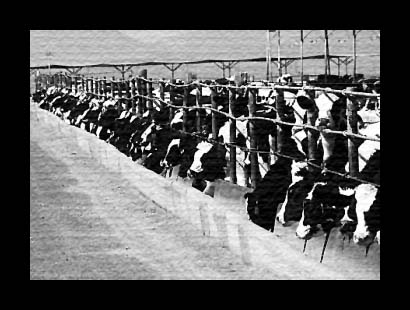
Each bite I take from my hamburger can almost be equivocated with going up to a cow in the pasture, or better yet, in a CAFO, and taking a bite out of it's hind quarters (I wouldn't recommend it, just picture it) My point is this: each time someone eats meat, there is an animal, somewhere, that had to die.

I have always been sensitive when it comes to animals. I remember on numerous occasions when an animal was hit by a car, like a deer, dog or bird; I would cry. The animal died because I hit it. I had similar feelings when it came to hunting animals. I couldn't bring myself to shoot them, and I just thought it was unethical (for lack of a better word) to kill them. Why then is it so easy to buy packaged meat at the store and eat it, but feel no remorse? The person eating the animal has just as much blame as the person who killed it. But, for some reason there is a disconnect between the animals and the people who eat them.


Michael Pollan, in his book "The Omnivore's Dilemma" said that "...most of us would simply rather not be reminded of exactly what meat is or what it takes to bring it to our plates (pp 305). He argues that the reason we don't know where our meat comes from, and how it gets to our plates, is simple: if the consumer knows, then the producer wont sell as much meat. This is one reason why slaughterhouses are off limits to everyone but the people who work in them. It seems like a good PR strategy to me. The question is, "Is it right, or is it wrong?" or, "It there a real answer to this question?"

It is hard for me to say, exactly. I suppose I could purport that it depends on the situation. However, learning about the process of turning a cow into a steak has definitely opened my eyes. Though I am not going to turn vegetarian or vegan, I am definitely going to think a little bit more about what I eat. I also know that I have eliminated my reservations for hunting. It's not that I have stopped abhorring the fact that I am ending the life of another animal. In fact, I think it goes beyond that. I am killing an animal any time I eat meat; therefore, I would rather know where my meat came from and how it got to my plate, then not have any clue if what I am eating really is what the packaging claims it to be.